
Spider caves, ruins, labs, deserts, throne rooms — every confirmed Vitromotus biome in Emberville and what lives in each.
Emberville Biomes: Every Dungeon Environment
Quick answer: Kymia warped the Vitromotus into distinct biomes — spiderwebbed caves, crumbling ruins, alchemy labs, a desert oasis, throne rooms, and overgrown depths confirmed so far. Each biome brings its own enemies, loot, and bosses, reshuffled every run.
Confirmed Biomes
| Biome | Look | Inhabitants and loot |
|---|---|---|
| Spider caves | Webbed tunnels, egg sacs, chitin floors | Spiders, spiderlings, the Spider Matriarch |
| Crumbling ruins | Collapsed stone, broken furniture, moss | Skeletons, early weapons and armor in breakables |
| Alchemy labs | Tanks, pipes, glowing fluid, arcane apparatus | Acolytes(?), potion ingredients, Kymia flavor |
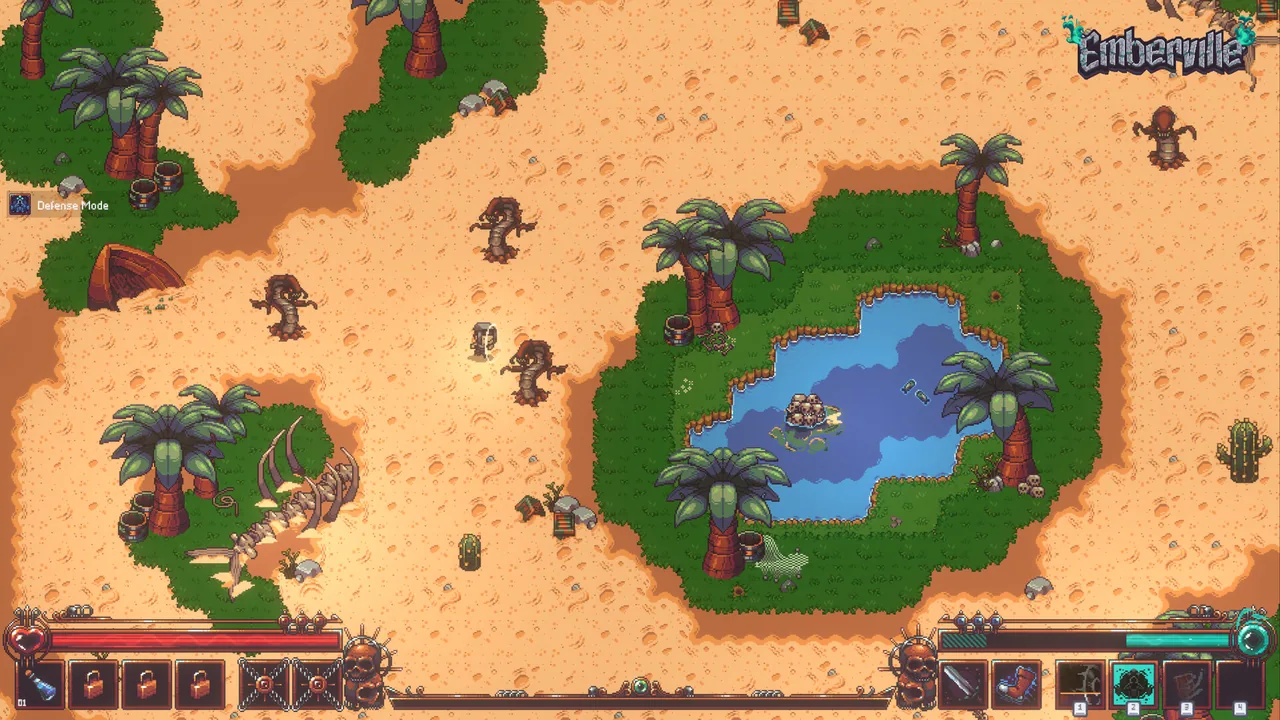
| Desert oasis | Palms, sand, crab-like creatures, campfire | Ranged packs, open-space kiting fights |
| Throne rooms | Red carpets, braziers, royal chambers | Elite guards, high-value loot |
| Overgrown depths | Mossy stone, roots, sunken bridges | Ambush packs, mixed loot |
| Town outskirts | Foggy streets, fountain square, forge | NPCs, shops, rebuild projects (surface) |
| Forest ponds | Woodland water, docks, quiet shores | Fish, herbs, safe gathering |
Assembled from the 22 official Steam screenshots plus preview descriptions (IGN's "dank spiderweb-covered caves, crumbling stone walls, rotting wooden buildings").
Official source: Emberville on Steam — "strange biomes and bizarre monsters"
How Biomes Structure a Run
Biomes are the dungeon's chapters: the prologue moves from prison rooms through acolyte halls into spider caves for the Matriarch, then out to the surface. Deeper EA content presumably stacks more biomes per descent, each with a boss gate. Because layouts reshuffle, learn biome rules (spider caves = adds, labs = tight corridors, oasis = open kiting) rather than memorizing maps.
Biome Tips
- Spider caves: area damage mandatory; watch walls for sacs.
- Ruins: break everything — early gear hides in furniture.
- Labs: tight corridors favor melee and shields over bows.
- Oasis: space is your weapon; kite in circles around the water.
- Throne rooms: expect an elite or mini-boss; enter buffed.
Unconfirmed Territory
Snow, volcanic, abyssal, and town-interior dungeon biomes are unrevealed — 1.0 promises "additional biomes," so this list roughly doubles by full release.
Kymia's Signature on Every Biome
Re-read the biome list through the lore: each environment is Kymia's emotion-fuel made visible. Spider caves breed from fear and hunger; the labs preserve a dead society's arrogance in glass and brass; the oasis is what tenderness looks like when the prison dreams; throne rooms are pride fossilized. This is not just set dressing theory — it predicts mechanics: biomes should reward the emotional opposite of their theme (courage plays in spider caves, humility in throne rooms) if the studio commits to its premise. Whether EA does this or not is the most interesting open design question in the game, and this page will track the answer biome by biome.
Throne Rooms and Labs: Reading Rich Rooms
Two biomes deserve special attention because their visuals promise outsized rewards. Throne rooms — red carpets, braziers, royal chambers — are prestige spaces; games put their best loot behind their grandest doors, so enter buffed, fed, and with empty inventory slots. Alchemy labs — tanks, pipes, glowing fluid — are crafting biomes disguised as combat zones; the real loot is ingredients and Kymia flavor, and tight corridors punish bows while rewarding shields and melee. Learn each rich room's tax (thrones tax preparation, labs tax positioning) and pay it gladly: the screenshot composition itself tells you these rooms are destinations, not hallways.
Oasis Strategy: Open Ground Is a Weapon
The desert oasis inverts every dungeon instinct: no walls to funnel, no doors to breach, just palms, water, and packs with room to maneuver. Here range dominates — bows and staves at maximum distance, circling the water while melee packs chase. Save consumables for the moment fliers or burrowers collapse the distance; open ground punishes immobility more than any trap. The campfire in the official shot is a hint, not decoration: rest, cook, or checkpoint mechanics likely anchor these oases, making them the desert's settlements. Treat every oasis as harbor first, hunting ground second.
Practically, it also predicts loot logic: fear-biomes drop survival gear (defense, sustain), pride-biomes drop prestige gear (damage, display), sorrow-biomes (ruins) drop memory items and lore. Farm the biome whose theme matches your build's missing piece.
Surface vs Depth: Two Games in One
Notice the screenshot split: half the biomes are above ground (town, farm, forest, oasis-adjacent wilds) and half below. Emberville is genuinely two environments with different rules — surface biomes are safe-ish, time-driven, rebuildable; depth biomes are hostile, run-driven, lootable. Master players will think in portfolios: surface income (crops, fish, timber) funding depth expeditions (ore, boss drops, rescues). Neglect either half and the other stalls — the farm pays for the forge, the forge pays for the dive, the dive pays for the town.
FAQ
Are biomes random each run?
Biome order and layout reshuffle; the biome set itself is fixed content. Two descents rarely look the same.
Which biome has the best loot?
Unconfirmed. Throne rooms look richest, but loot tables await EA documentation.
Are biome layouts fixed?
No — layouts reshuffle per run within each biome's rules. Learn biome grammar (webbing means spiders, tanks mean tight corridors, carpets mean elites), not maps.
Do biomes have level requirements?
No published gates, but difficulty clearly tiers by depth — the prologue path (rooms to halls to spider caves) is the tutorial for reading which biome your build is ready for.
Will new biomes favor new builds?
Inevitably — each biome's enemies and geometry reward different answers, which is the dungeon's way of auditing your roster. A one-build player eventually meets the biome built to punish it; a three-class player meets a playground.
Layouts reshuffle every run — memorize what each biome demands (adds, corridors, elites), never the floor plan.
Sources
Related
More Emberville Guide Guides
What Emberville EA includes at launch, what 1.0 adds — modding, bosses, biomes — and how community feedback shapes the year.
Build your Emberville estate: workbenches, furnaces, farms, decorations, and why your homestead drives dungeon progress.
Every confirmed Emberville answer in one place: release date, co-op, price, platforms, classes, permadeath, demo, and system specs.
How farming works in Emberville: crop plots, Herbalism and Farming masteries, and turning harvests into food for dungeon dives.
Fishing, Mining, Smelting, and Woodcutting in Emberville: how gathering masteries level and feed your crafting and kitchen.
How Emberville gear works: dungeon loot, forging weapons and armor, potions, food, tools, and trinkets — all pre-launch confirmed.
The Knight is Emberville's defensive melee class: Raise Shield, Counter Attack, block scaling, and how to build around it.
Kymia is Emberville's emotion-born magic: it resurrects the dead, reshaped the prison into biomes, and fuels your Kymia Points.