
How farming works in Emberville: crop plots, Herbalism and Farming masteries, and turning harvests into food for dungeon dives.
Emberville Farming Guide: Crops, Herbalism, Plots
Quick answer: Farming in Emberville means tilling plots near your farmhouse, growing visible crop stages, and leveling the Herbalism and Farming masteries by doing the work. Harvests feed Cooking, and Cooking feeds dungeon dives — the farm is your supply line.
How Farming Works
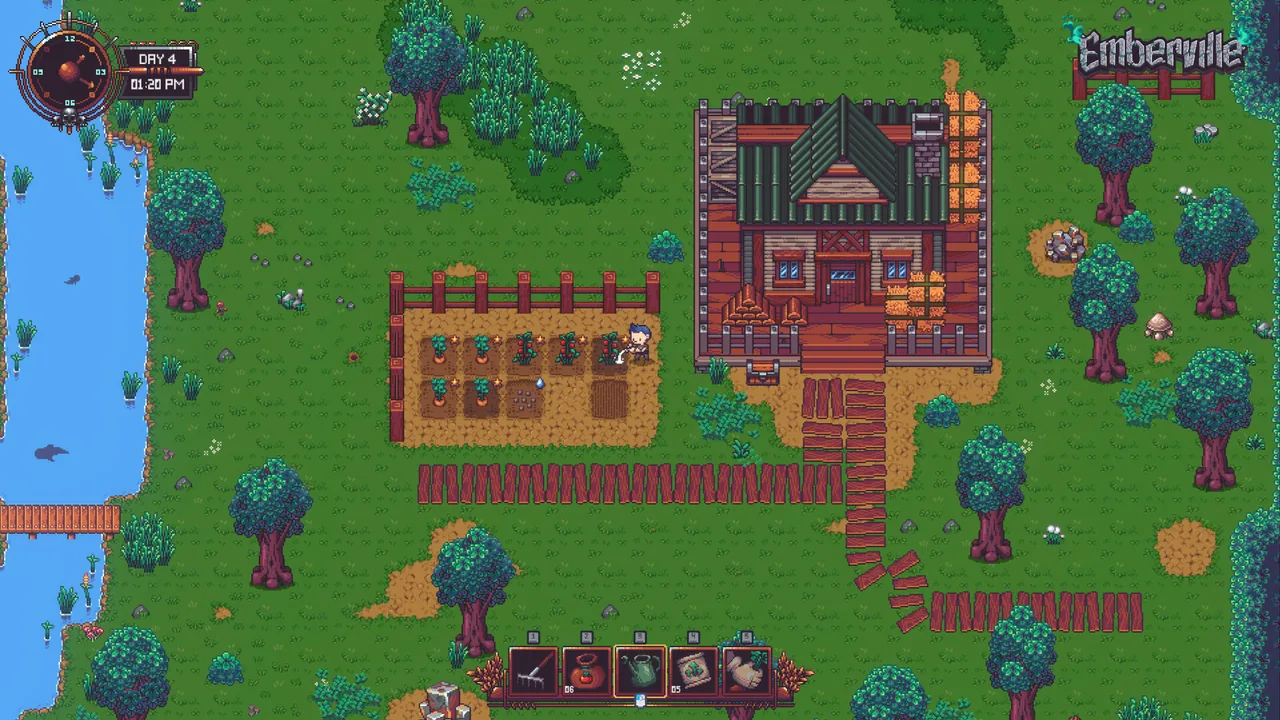
Official screenshots show fenced crop plots with distinct growth stages beside a farmhouse, plus a larger windmill farm with tilled fields and furnaces. The loop is classic: plant, tend, harvest, cook. Farming and Herbalism are two of the six gathering masteries, leveled by repetition — previewers note these are among the easiest masteries to max by working the town between dives.
Official source: Mobalytics — Emberville leveling and stats
The Gathering Mastery Family
| Mastery | Covers |
|---|---|
| Herbalism | Wild plants and herbs |
| Farming | Crop plots and harvests |
| Fishing | Ponds, rivers, docks |
| Mining | Ore and stone |
| Smelting | Refining ores into crafting metals |
| Woodcutting | Timber for buildings and fuel |
Mobalytics notes "in the early version there is no information about the bonuses they give" — mastery exists and levels, but rank rewards await documentation.
Farm to Table: Why Bother
| Step | Payoff |
|---|---|
| Grow crops | Steady ingredient supply, no dungeon risk |
| Cook harvests | Battle-ready food (select ingredient, hit start) |
| Eat before dives | Sustain for bosses like the Spider Matriarch |
| Level Cooking alongside | Mastery grows with every meal (crafting) |
Individual crop names, growth times, seasons, and sell prices are unrevealed. Any "best crop" table published before launch is invented. We will document the real catalog from the EA build.
Farming Tips for Launch
- Plant early — screenshots show Day 4 farms already producing; crops grow while you dive.
- Fence your plots — the official farm layout uses fenced beds; expect pests or mechanics that punish open fields.
- Pair with fishing — the pond farm region suggests water nearby; alternate harvest and fishing runs (fishing).
- Windmill farms scale — the big farmstead with furnaces hints at late-game agricultural infrastructure worth rebuilding toward.
The Farmstead Tour (From Screenshots)
The official windmill farm is the best pre-launch look at progression: a windmill structure, rows of active furnaces, multiple tilled field blocks, fenced beds, and storage crates — industry, not a garden. Read it as a promise: early farming is hand plots by the farmhouse; late farming is mechanized production feeding bulk cooking and crafting. Rebuild toward the windmill, and route Smelting through the same site — the furnaces sit on the farm, not at the forge, which tells you processing and growing are one system.
Herbalism deserves special attention: wild herbs feed Alchemy directly, making the herbalist-gatherer the potion pipeline's first mile. If dungeon herbs prove scarce, a dedicated herb bed (if plantable) becomes S-tier infrastructure.
Crop Growth Stages (What Screenshots Show)
The Day-4 farm screenshot is a growth-stage Rosetta Stone: adjacent fenced beds hold visibly different plant sizes — sprouts, mid-growth bushes, and mature harvest-ready crops side by side. That single image confirms staged growth (not instant or single-state), same-day planting-to-progress, and multi-plot management as the intended interaction. The practical read: stagger plantings so beds mature on rotation rather than all at once, keeping the kitchen supplied continuously instead of feast-or-famine. Whether growth ticks on the day clock, on sleep, or on real time is unconfirmed — plant before every descent regardless, and note which beds advanced on return. Your first three dive-returns will answer the timing question empirically.
Windmill Economics: When Farming Goes Industrial
The windmill farmstead reframes agriculture from chore to industry: tilled field blocks at a scale no hand plot matches, furnace rows colocated with crops, storage crates staged for bulk output. The strategic read is phasing — hand plots fund the early game (food for bosses, ingredients for first batches), while the windmill complex is the mid-game capital project that converts surplus into wealth or war material. Prioritize its restoration after combat-critical town systems (forge, kitchen) but before beautification: an industrial farm shortens every subsequent grind in the game, from Cooking mastery to potion stockpiles to trade goods. The farm pays for everything else, so fund the farm.
Do crops need watering?
Unconfirmed. Fenced beds, staged growth, and day-clock timing are confirmed; the tend mechanic (watering, weeding, fertilizing) is not yet described. Watch the Day-1 tutorial text — it will name the verb within minutes.
What should I plant first?
Whatever the game offers first — early crops fund the kitchen, and the kitchen funds bosses. Diversify only after the first harvest; a single staple in bulk beats five novelties in singles for Cooking XP.
How many plots should I run?
As many as you can replant without dreading the chore — farming scales with attention, and neglected beds are wasted space. Start with a staple block plus one experimental bed; expand when harvesting feels fast rather than dutiful. The windmill complex is the long-term answer to scale; hand plots are the short-term proof you enjoy the loop enough to deserve it.
FAQ
Is there livestock?
Chickens appear in the prologue town (one previewer even fought one), but animal husbandry systems are unconfirmed.
Do crops grow while I am in the dungeon?
The day-clock mechanic suggests time passes on dives, which would let crops mature underground — unconfirmed, but plant before every descent regardless.
Can farming alone sustain a save?
Almost — food covers sustain and cooking covers buffs, but metals, boss materials, and rescues only come from below. The richest saves farm hard and dive deep; either half alone stalls within days.
Sources
Related
More Emberville Guide Guides
Who makes Emberville: Cygnus Cross debut studio, CohhCarnage co-creator role, and the 22-actor voice cast with Amelia Tyler and Matt Mercer.
What Emberville EA includes at launch, what 1.0 adds — modding, bosses, biomes — and how community feedback shapes the year.
Build your Emberville estate: workbenches, furnaces, farms, decorations, and why your homestead drives dungeon progress.
Every confirmed Emberville answer in one place: release date, co-op, price, platforms, classes, permadeath, demo, and system specs.
Fishing, Mining, Smelting, and Woodcutting in Emberville: how gathering masteries level and feed your crafting and kitchen.
How Emberville gear works: dungeon loot, forging weapons and armor, potions, food, tools, and trinkets — all pre-launch confirmed.
The Knight is Emberville's defensive melee class: Raise Shield, Counter Attack, block scaling, and how to build around it.
Kymia is Emberville's emotion-born magic: it resurrects the dead, reshaped the prison into biomes, and fuels your Kymia Points.